Green Goddess Cross Stitch Pattern: A Designer’s Review
As an embroidery designer working daily with small businesses, I evaluate digital files not just as art, but as tools for building brand identity. When a café, boutique, or creative studio considers using a design like the Green Goddess Cross Stitch Pattern for their merchandise, the first question isn’t about decoration—it’s about function. Can this pattern translate into a credible, durable brand asset on uniforms, patches, and products? Let’s break it down from a professional perspective.
First Impression: Art Nouveau Elegance with Handmade Warmth
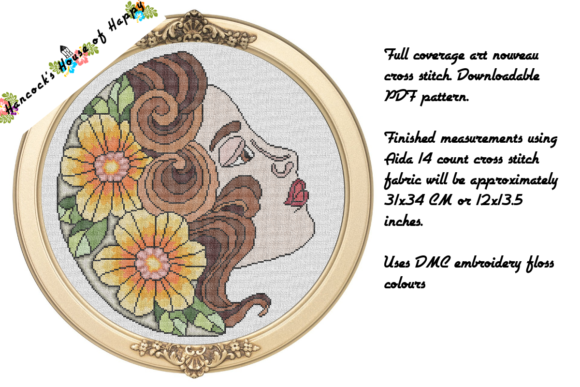
The description states this pattern is inspired by stained glass in the Art Nouveau style. That immediately sets a tone. Art Nouveau is characterized by flowing, organic lines, natural motifs, and a sense of elegant craftsmanship. For a business, this suggests a brand personality that is handmade, premium, and artistic. It feels less like a generic logo and more like a signature piece. This is powerful for businesses built on authenticity—think a botanical café, a floral studio, a wellness boutique, or an artisan bakery. The “Green Goddess” theme itself evokes nature, growth, and vitality, which can align beautifully with a brand’s core values.
However, the finished measurements provided—approximately 31x34 CM or 12x13.5 inches on 14-count Aida—are crucial. This is a substantial size for a cross stitch piece. In the context of small business merch, this means the design has significant scale and detail. My first designer note: this detail must be carefully managed when adapting it for embroidered patches or apparel accents.
Performance in Real Business Applications
How does the Green Goddess Cross Stitch Pattern perform when applied to actual business needs? Let’s consider common use cases.
Embroidered Patches for Branded Merchandise
For a handmade shop or Etsy seller looking to create a signature embroidered patch for tote bags or aprons, the intricate, stained-glass style offers a high-value, custom look. The flowing lines and botanical elements would translate well into a patch, provided the stitch density is managed. A patch version would need to simplify some of the finest details to remain crisp and durable, especially on textured fabric. This pattern could become a beautiful chest logo accent on staff uniforms or a standout feature on a tote bag design.
Apparel Decoration: Uniforms, Caps, and Aprons
For cap embroidery or the front of a work shirt, the design’s current size is too large. It would need to be scaled down significantly. The Art Nouveau curves are elegant but can become muddy if reduced too much for a small patch size. A professional step here is to test it in black and white first at the intended small scale to see if the outlines and shapes remain clear. For an apron embroidery or a sleeve detail, where a slightly larger area is available, it could work wonderfully, adding a playful yet premium touch to a bakery or café’s staff attire.
Product Packaging and Boutique Merchandise
Beyond apparel, this pattern shines as a design asset for product presentation. A simplified motif derived from the main design could be used as an accent on product labels, gift tags, or printable mockups for a website. It reinforces visual consistency. For a business selling handmade products, using this pattern on their own merchandise—like a limited-run embroidered handkerchief or a framed piece in the shop—acts as a direct customer engagement tool, telling a story about the brand’s aesthetic.
Where to Use This Design Carefully
A key part of my review is flagging potential challenges. The Green Goddess Cross Stitch Pattern’s beauty lies in its detail, which requires careful application in commercial embroidery.
- Small Scale Applications: On cap fronts or tiny product patches, the intricate lines might lose definition. Always create a mockup for client approval at the actual production size.
- Curved Surfaces and Textured Fabric: Embroidering on a curved cap or a coarse apron fabric demands a robust design. Check how the pattern’s outlines behave on such surfaces in a test.
- High-Stitch-Density Areas: The stained-glass inspiration might imply areas of solid color fill. High stitch density can make patches stiff and less comfortable on apparel. Review this when choosing the final embroidery file settings.
- Dark Uniforms and Color Contrast: The “green” theme suggests a color palette. On dark garments, thread color contrast is vital for visibility. A test on real fabric with proper stabilizer is non-negotiable.
- Items Requiring Frequent Washing: For staff uniforms or bags that see heavy use, the design’s integrity after washes is paramount. A well-digitized file with secure stitching is essential.
Impact on Brand Identity and Professionalism
Choosing a design like this for business use isn’t just about aesthetics; it’s a brand strategy. This pattern communicates craftsmanship and attention to detail. It can elevate a handmade product line, making it feel more curated and less generic. For customer trust and recognition, a consistent, beautiful emblem on staff aprons or store totes makes the brand memorable. It adds product value; a tote bag with a unique, artistic embroidered patch can command a higher price than one with a plain logo.
However, professionalism hinges on execution. A poorly scaled or hastily embroidered version of this intricate pattern could look messy, undermining that premium feel. My advice: compare it beside other design assets in your brand portfolio. Does it complement your existing visual language? Does it feel cohesive?
Practical Designer Notes for Business Implementation
Before you commit this pattern to production for your custom apparel or small business merch, here are my professional steps:
- Confirm Commercial Licensing: The product is listed under Graphics. As a business, you must confirm commercial licensing before using this pattern on items for sale. Never assume.
- Check the Technical Specs: The description gives finished cross stitch dimensions, but for machine embroidery design, you need specifics like the actual embroidery file format, stitch count, and recommended hoop size. Request or verify these details from the file provider.
- Test Rigorously: Test on real fabric that matches your final product—cotton twill for a patch, denim for a bag, poly blend for a cap. Use the correct stabilizer. Check thread color contrast and inspect spacing between elements.
- Scale for Purpose: If using it for a small chest logo, scale it down digitally and examine the result. Does the “stained glass” effect still read clearly?
- Client Presentation: If you’re the designer producing for a client, always create a mockup for client approval. Show them how it looks on a digital image of a cap, apron, or tote.
The Final Verdict for Merchandise Creators
The Green Goddess Cross Stitch Pattern presents a compelling opportunity for businesses that want their branded merchandise to tell a richer story. Its Art Nouveau elegance offers a distinct, non-corporate look that resonates with customers seeking authenticity. For use on embroidered patches, apron designs, and tote bag marks, it can be successful, provided its detailed nature is respected and technically adapted. It is not a one-size-fits-all design; it requires thoughtful scaling and professional digitization for machine embroidery. But for the florist, the pet brand with a natural theme, or the creative studio wanting to embed artistry into every touchpoint, this pattern can be transformed from a beautiful cross stitch pattern into a powerful, cohesive brand identity asset.